
Every Lead to the right licensed loan officer or agent, the first time
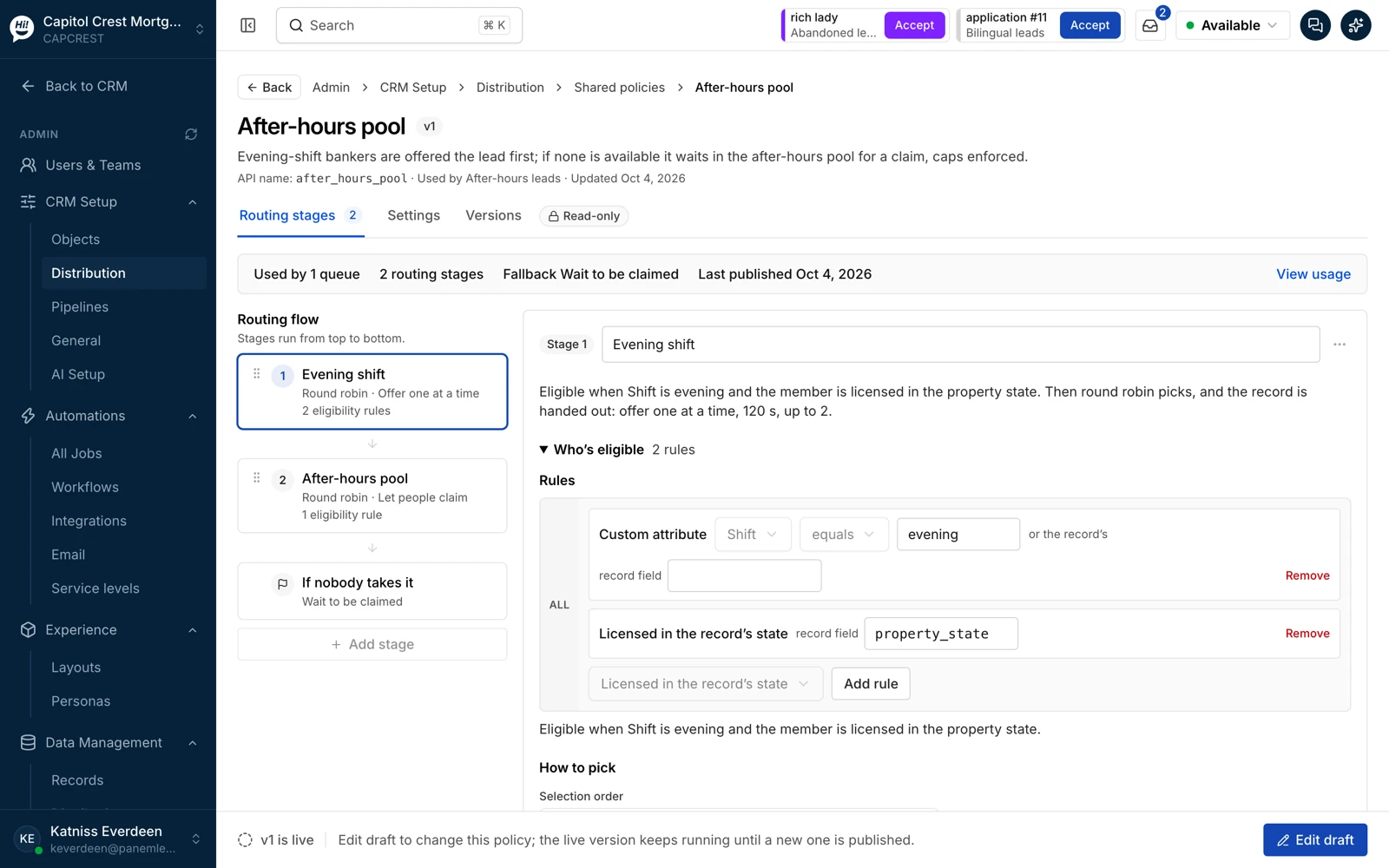
Distribution rules read the license, the state, the product, the branch, the skill and the capacity of each person before a Lead is offered. An officer who cannot work the Lead never sees it, and every assignment is on the record.
The rule editor itself is an admin screen; we show it in a live demo.

Hard gates first, then the order
License and state are gates: a person who is not licensed where the borrower or the property is never receives the offer. Product, branch, skill and capacity shape who is asked first.
- Timed offers, queue-and-claim or weighted rotation, per source and per queue
- Capacity counts open Leads, not just head count
- A hot tier can jump to a priority queue with its own clock
The unaccepted Lead goes back to the queue
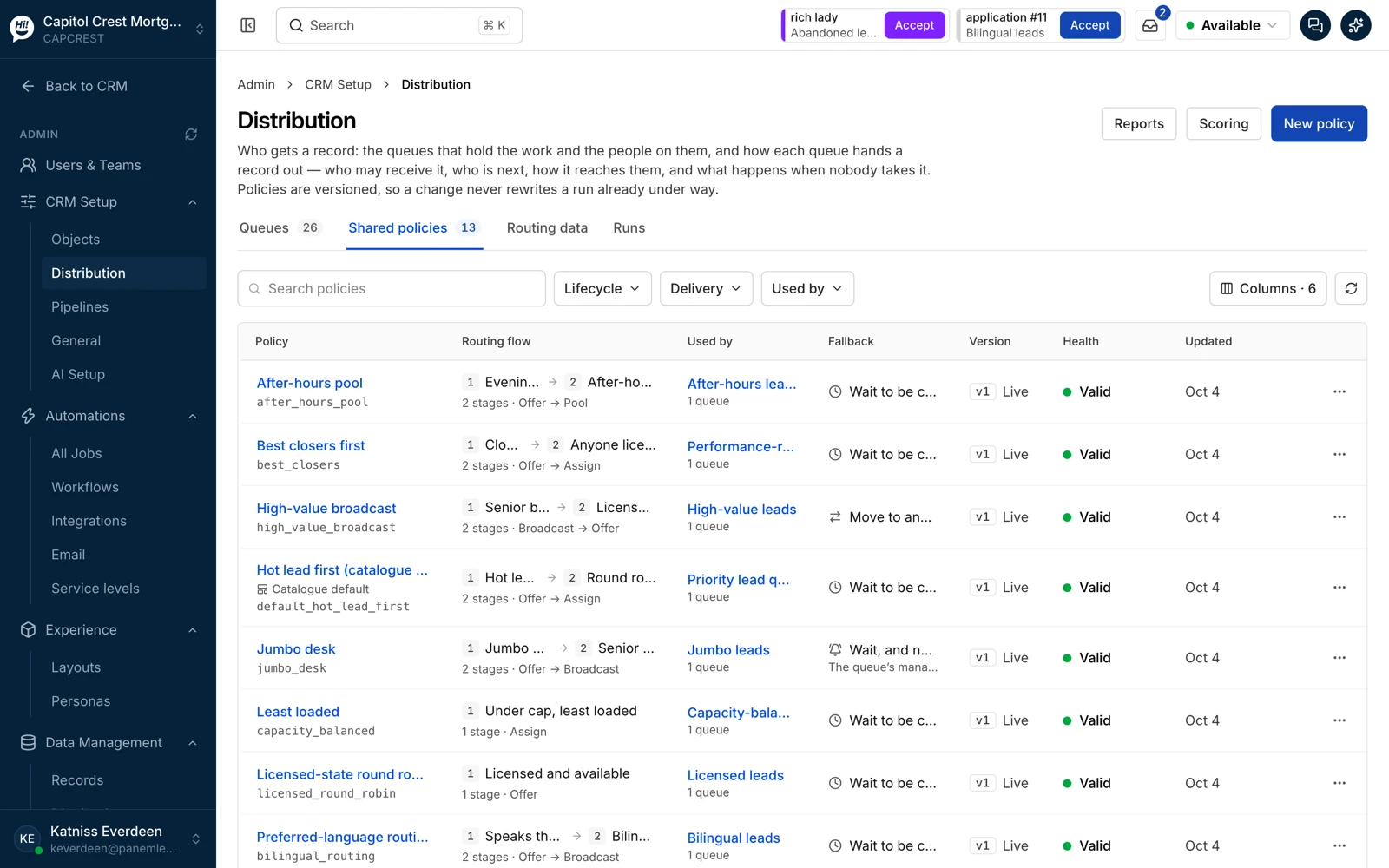
An offer that is not accepted inside its clock moves to the next stage: the next eligible person, a broadcast, an assignment or a pool to claim from. Each policy ends in a fallback, so when the stages run out the Lead waits to be claimed, moves to another queue, or waits while the manager is told.
- Every queue hands records out through a shared policy: offer, broadcast, assign or pool, stage by stage
- A fallback per policy: wait to be claimed, move to another queue, or wait and notify the manager
- Policies are versioned, so a change never rewrites a run already under way
Who was offered, who accepted, who reassigned, and why
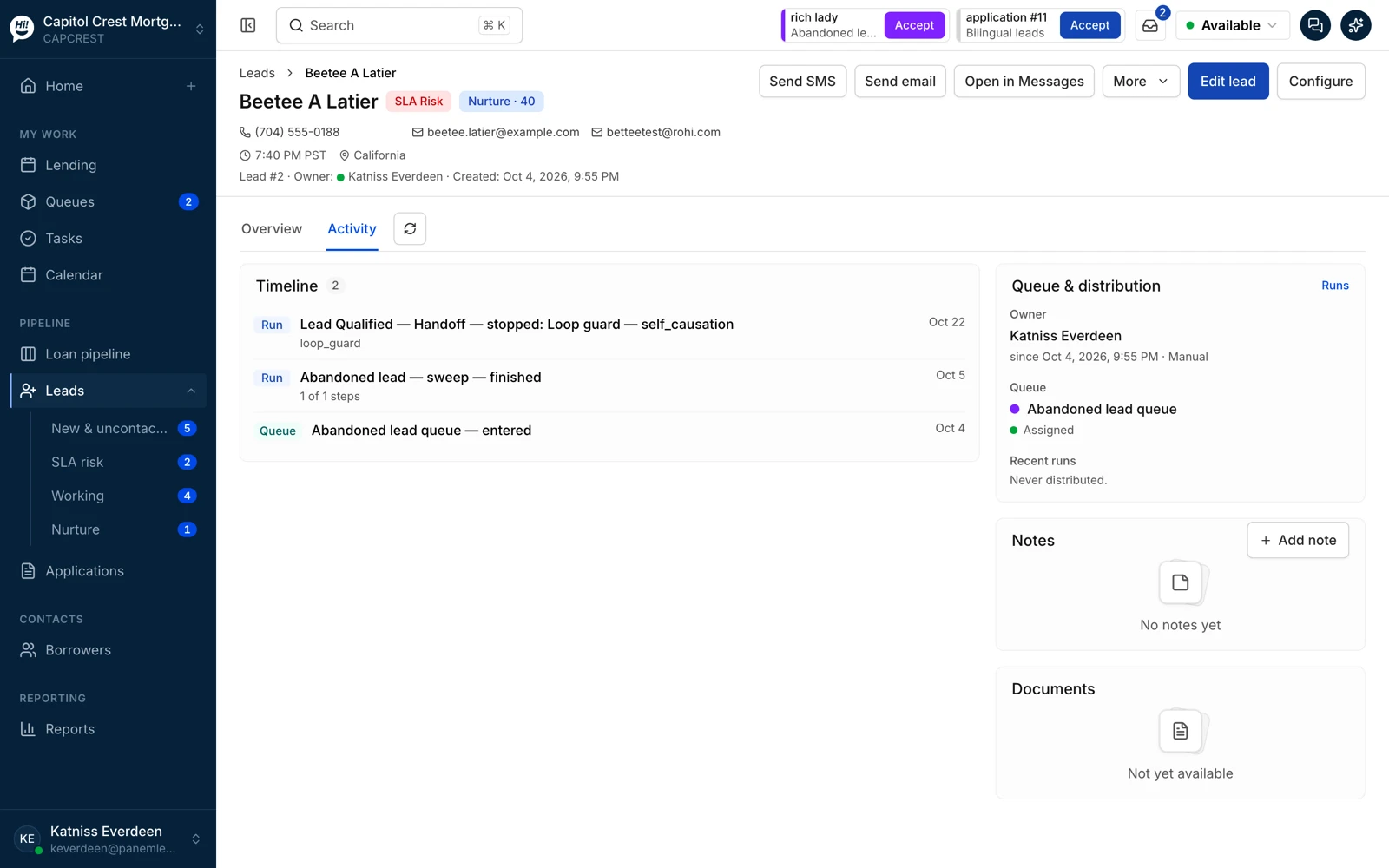
The activity record keeps the assignment chain with time stamps, so a Lead that moved between officers still tells the whole story and source-to-funded reporting stays true.
- Every offer, acceptance and reassignment on the record
- Reassignment reasons a manager can read back
- Reports on offers, acceptance and time to first assignment
Your baseline first, then the change
We do not publish benchmarks. A pilot starts by measuring these on your own Leads, then runs the workflow and measures them again.
From intake to an accepted owner, by source.
How often the first eligible person takes the Lead.
A rising number means the rules or the capacity are wrong.
The gap between your licenses and your lead sources.
Questions buyers ask
Can routing read our licensing data?
Yes. Licenses and states are fields on each person, maintained by your admins or synced from the system you keep them in. The distribution rules read them before any offer goes out.
What happens after hours?
Business calendars decide when a clock runs. A Lead that arrives outside the calendar can wait in the queue, go to an after-hours team, or start a Customer Engagement conversation where licensed, whichever rule you set.
Does AI decide who gets the Lead?
No. Distribution rules are explicit and versioned, and a person can read every decision back on the record. The assistant can suggest, but routing is a rule, not a guess.
How do we migrate rules from our current tool?
We map your current distribution logic to eligibility, order and clocks during the pilot scope, run both side by side on the pilot team, and switch when the numbers hold.