
Reach borrowers and insurance shoppers first, with the right person
A clock per source and per stage, business calendars that keep it honest, and a queue that escalates when the clock runs out. Speed to lead is the leading indicator you set; revenue is what you measure it against.

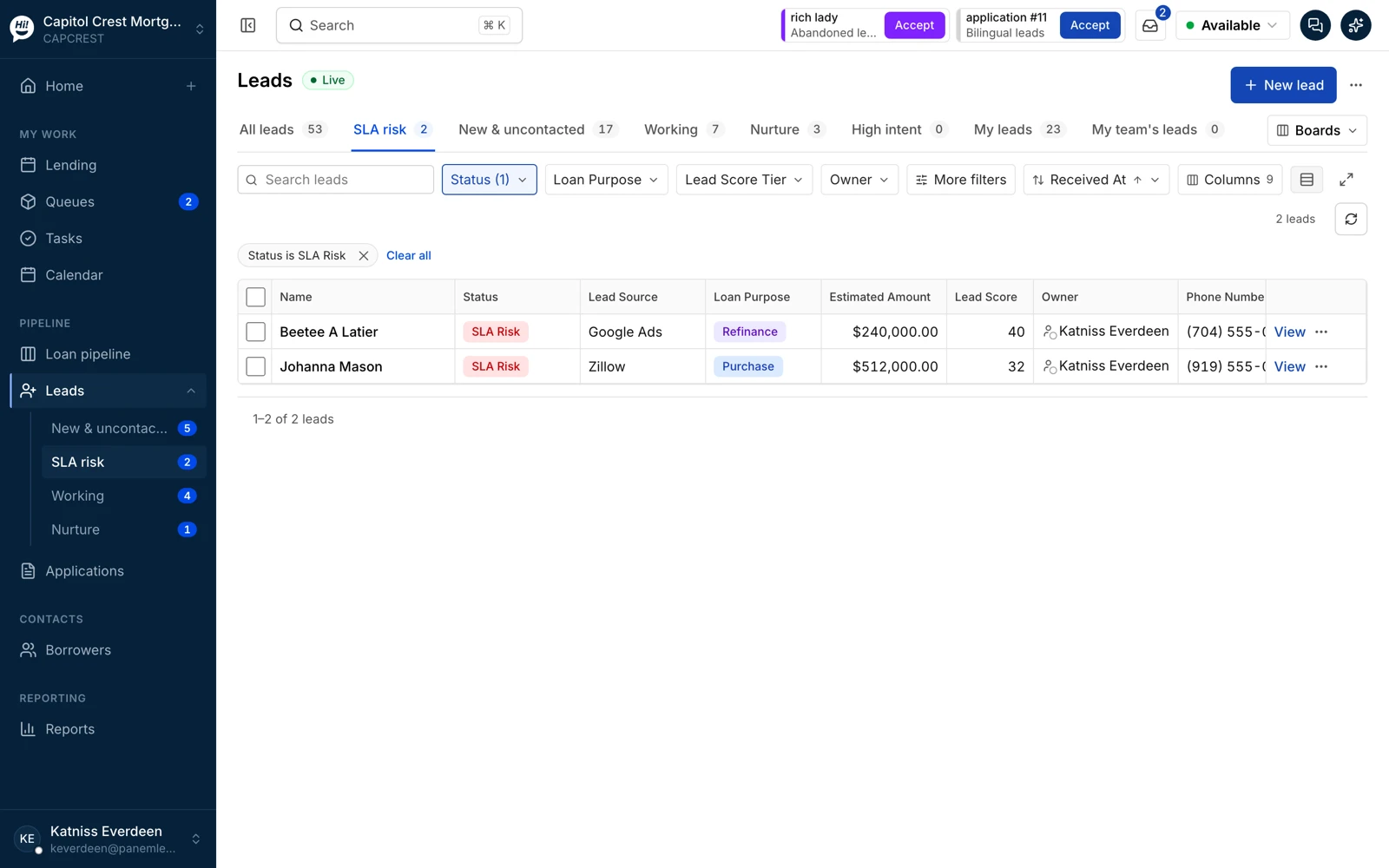
A clock per source, not one clock for everyone
A marketplace Lead and a referral from a past client do not deserve the same clock. Service levels are set per source and per stage, and business calendars decide when they run.
- Clocks by source, queue and stage
- Business calendars and quiet hours you configure, by state where needed
- Escalation to the queue or to a manager when a clock runs out
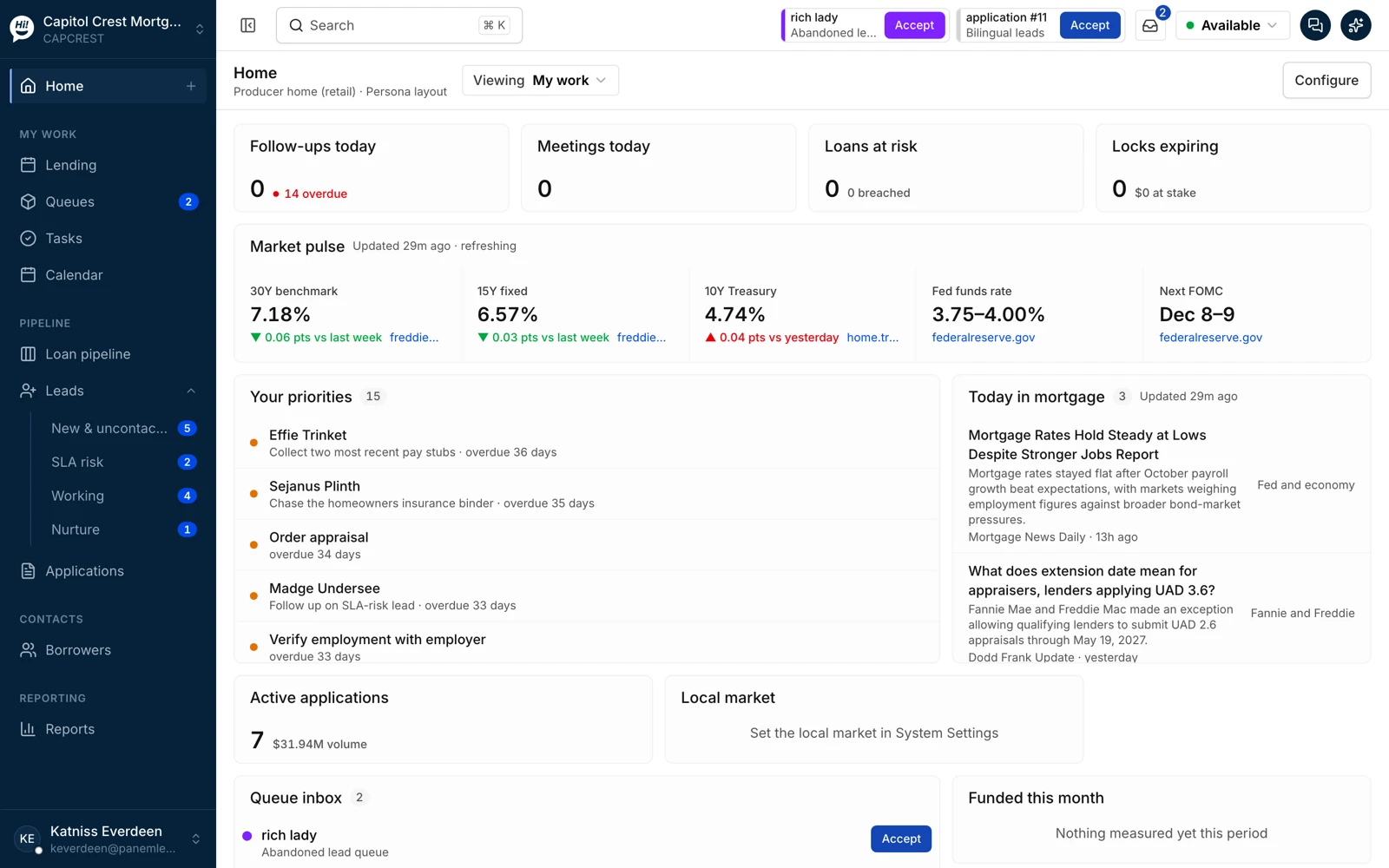
The morning starts with what is closest to running out
The home briefing orders the day by clock and stage. The SLA-risk list is the manager’s first view. The assistant drafts the first text; the person sends it, and the clock stops when the Lead answers.
- Priorities ordered by clock, not by who shouted last
- Call, text or email from the row, through Customer Engagement where licensed
- A Lead nobody accepts returns to the queue instead of dying in an inbox
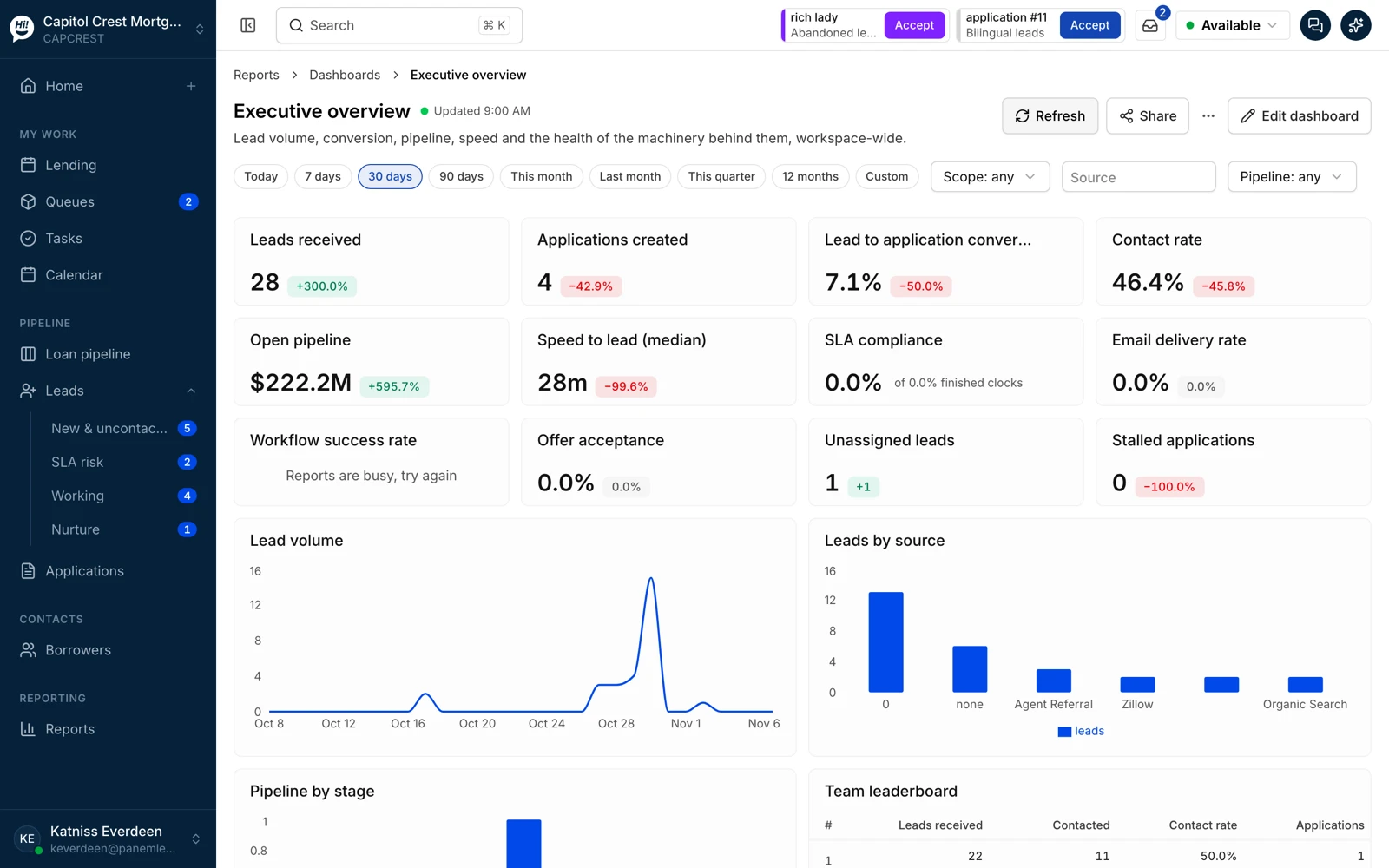
Speed to lead and SLA attainment on the dashboard
Median speed to lead, SLA attainment, contact rate and unassigned Leads are tiles on the executive overview, cut by source, owner and period. The same numbers run in scheduled reports.
- By source, so you see which clocks are met and which are not
- By owner, so capacity problems show up as numbers
- Trended, so a change in the rules shows up next week
Your baseline first, then the change
We do not publish benchmarks. A pilot starts by measuring these on your own Leads, then runs the workflow and measures them again.
Intake to first attempt, and intake to first conversation.
The share of Leads contacted inside their clock, by source.
Leads reached at all, which is what the clock is for.
The morning number a manager wants at zero.
Questions buyers ask
What is the right speed-to-lead target?
It depends on the source, the hour and your capacity, and we do not publish a benchmark. Set the first clock from your own baseline, measure contact rate against it, and tighten it as capacity allows.
Can AI make the first contact?
Where licensed, Botsplash Customer Engagement can answer first on chat, text or voice inside the rules you set, and hand off to a person. The CRM records the attempt, stops the clock on a reply and keeps the person in charge of what happens next.
What about Leads that arrive at night or on weekends?
Business calendars decide whether the clock runs. A night Lead can wait for the morning queue, go to an after-hours team, or get an automated first response, whichever rule you choose for that source.
Does a faster clock mean more funded loans?
Not by itself. Response time is a leading indicator; it has to show up in contact rate and Lead-to-Application on your own numbers. That is why a pilot measures the baseline first.