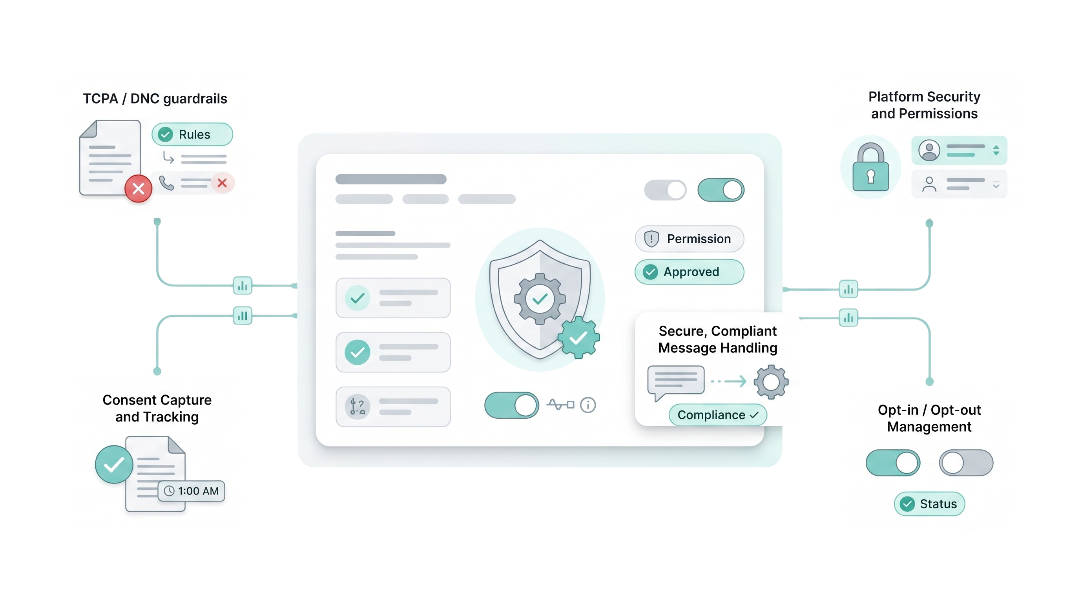
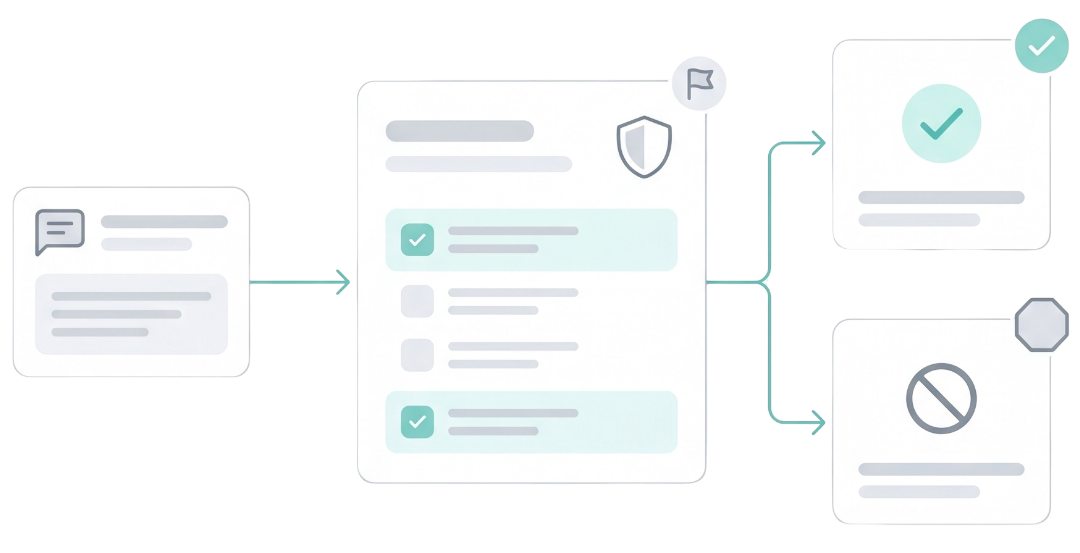
Do Not Call and quiet hours: Check numbers against the suppression lists you maintain, and hold messages outside the calling hours you configure for each state.
Rules you control: Your compliance team defines the rules; the platform applies them to every send and records the outcome. No setting makes a business compliant on its own.
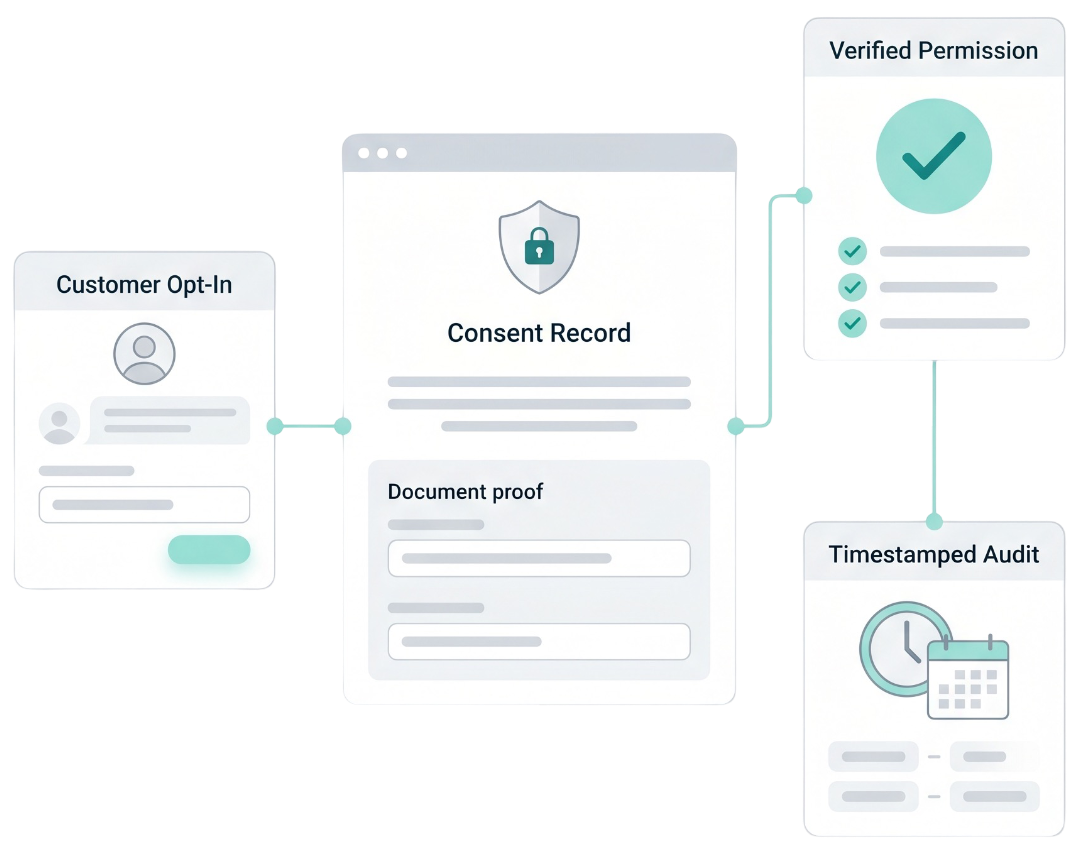
Consent records: Keep a timestamped log of when, where and how each consumer opted in, including the source and the language they agreed to.
Evidence on demand: Export the record for a number or a campaign when your compliance team, a carrier or a regulator asks for it.
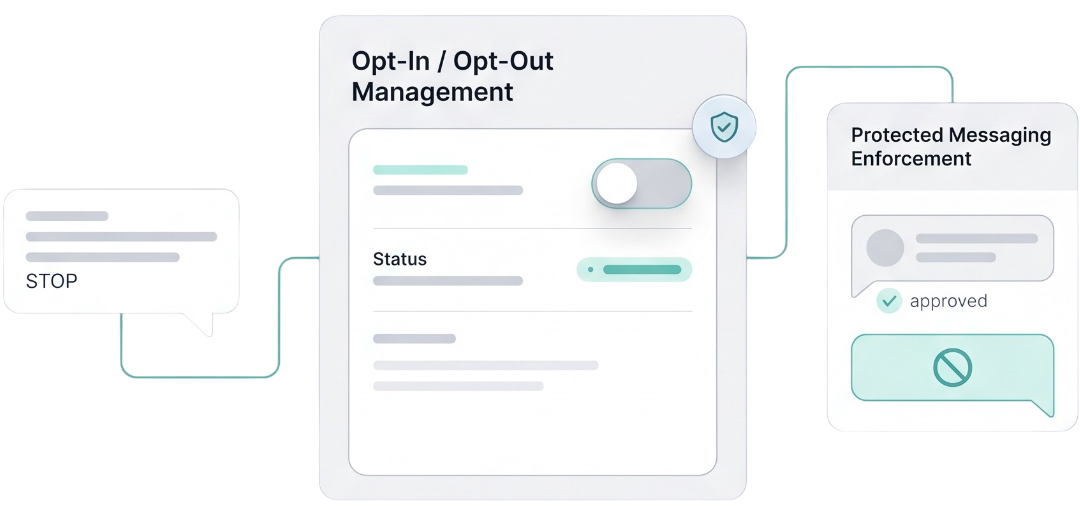
STOP handling: Honor opt-out keywords across channels automatically, and record each one on the contact.
Suppression that travels: An opted-out contact is flagged in Botsplash before your CRM record is updated, so agents and campaigns see the same status.
Security program: Botsplash Customer Engagement has completed a SOC 2 Type II examination, and data is encrypted in transit and at rest. The current report and its scope are available on request.
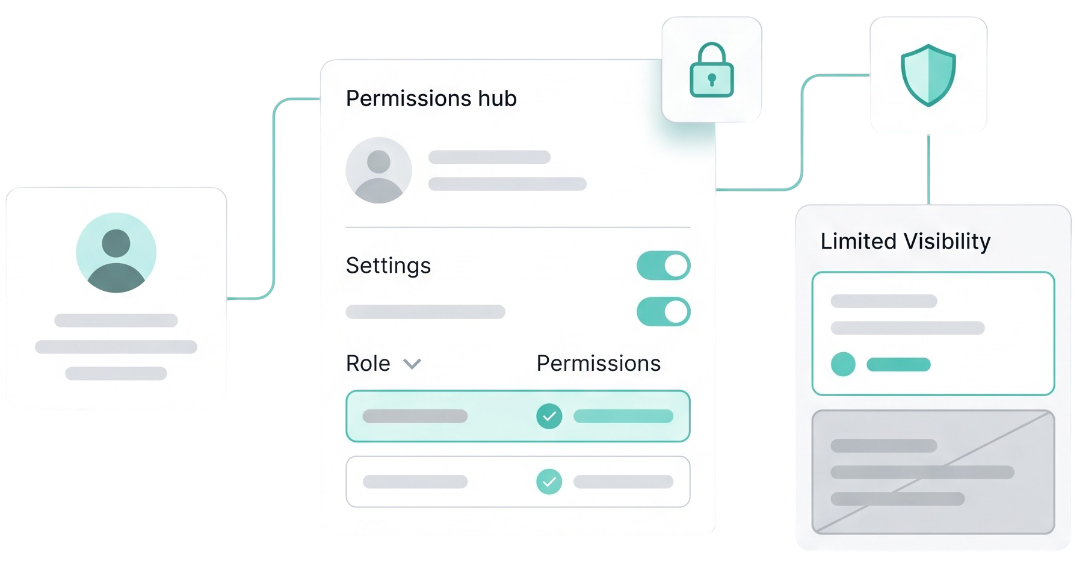
Granular Access Control: Use role-based permissions to ensure agents only see necessary information, protecting both consumer privacy and agency integrity.
You maintain the suppression lists, including numbers from the National Do Not Call Registry and your own do-not-contact list. Botsplash checks numbers against those lists before a message or call goes out and blocks the ones that match. The lists, and the decision to use them, belong to your compliance team.
The opt-out is processed automatically. The contact is flagged as opted out across all channels in the Botsplash dashboard, so agents and campaigns see the status before they send.
Botsplash Customer Engagement has completed a SOC 2 Type II examination. Data is encrypted in transit and at rest, and access is limited by role. We share the current report, its scope and our security practices through our security review process.
Yes. Botsplash supports 10DLC brand and campaign registration with the carriers and helps you prepare the submission. Registration improves deliverability for registered traffic; the carriers decide how messages are filtered.
Quiet-hour rules vary by federal and state law and change over time. You configure the hours that apply, by state where needed, and Botsplash holds messages queued outside them until the window opens. Your compliance team decides the hours.
Botsplash keeps a timestamped consent record that captures the source (for example, a specific web form or lead provider) and the language the consumer agreed to when opting in. You can export that record when your compliance team, a carrier or a regulator asks for it.
Yes. With role-based permissions, a junior agent might see only their assigned leads while a manager sees team-wide analytics, so data is available only to the people who need it for their role.
Yes. Because opt-out status is kept in Botsplash, it acts as a safety net: even if your CRM record has not been refreshed, Botsplash blocks the message based on its own opt-out flag.
A working session of 30 to 40 minutes, on your channels and your rules.